


What’s the Difference Between a Urine Drug Screen and a Confirmation Test?
In clinical settings like mental health, substance use recovery, and pain management, drug testing is essential for ensuring treatment integrity and patient safety. Yet many providers and patients are unclear about the key differences between a urine drug screen and a confirmation test. As a leading clinical laboratory specializing in toxicology, we’re here to clarify what sets these two tests apart—and why both are critical to delivering high-quality care.
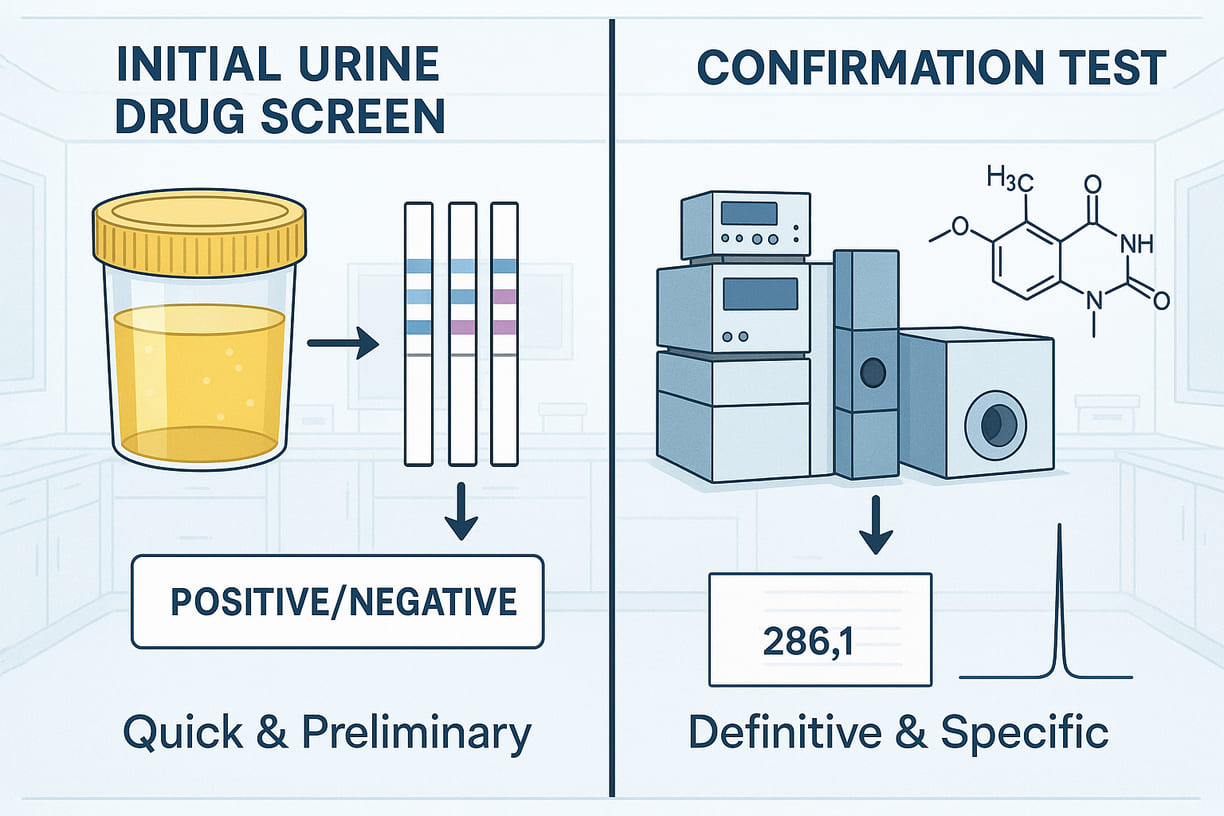
Urine Drug Screen (Immunoassay Testing): The First Line of Defense
Urine drug screening is the initial step in toxicology testing. This rapid immunoassay uses antibodies to detect the presence of drug classes, such as opiates, amphetamines, or benzodiazepines. It’s cost-effective and produces fast results, making it an efficient tool for routine monitoring.
However, immunoassays are susceptible to cross-reactivity, which can potentially lead to false positives or false negatives. This is particularly concerning in clinical environments where accuracy directly influences treatment plans.
Confirmation Testing (LC-MS/MS or GC-MS): The Gold Standard
To eliminate uncertainty, any positive or unexpected screen result should be followed by confirmation testing. Using state-of-the-art techniques like Liquid Chromatography-Tandem Mass Spectrometry (LC-MS/MS) or Gas Chromatography-Mass Spectrometry (GC-MS), our laboratory can precisely identify the substance present and its concentration. These results are legally defensible and clinically reliable.
Why Your Clinic Needs Both
Accurate drug testing empowers providers to make confident treatment decisions, minimize legal risk, and build trust with patients. At Ion Diagnostics, we offer both screening and confirmation services with rapid turnaround times and full EMR integration.
Need a reliable lab partner?
Contact us to schedule a consultation and see how we can support your patient outcomes.
