


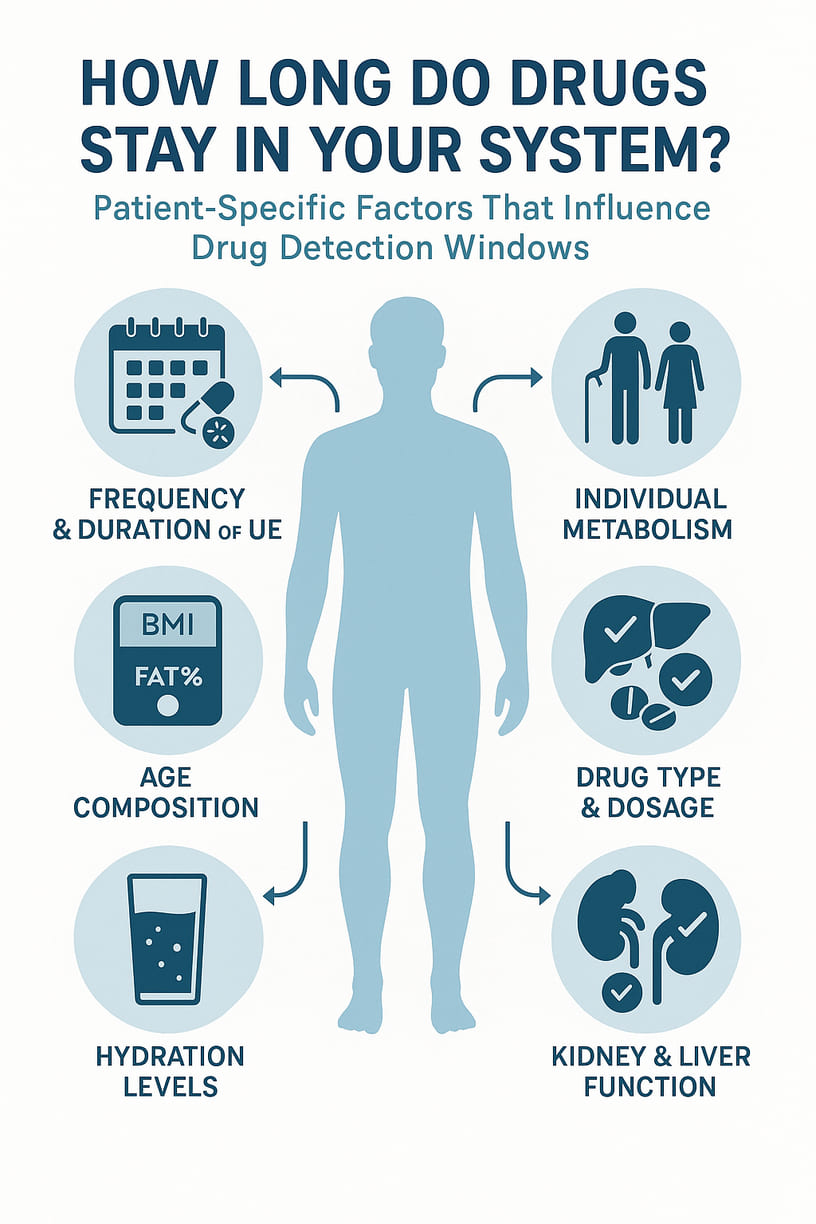
How Long Do Drugs Stay in Your System? Understanding Patient-Specific Factors
“How long will this drug stay in my system?” It’s a question we hear every day—and one without a simple, one-size-fits-all answer. The truth is, drug detection windows vary significantly from person to person. At Ion Diagnostics, we help clinicians interpret test results by factoring in the unique biological, metabolic, and behavioral attributes of each patient.
Here’s a deep dive into the most influential factors that determine how long a drug remains detectable in an individual’s system:
1. Frequency and Duration of Use
The more frequently a person uses a substance, the more it accumulates in the body. Chronic users may store drugs in fat tissues, extending the time it takes to fully eliminate the substance. In contrast, someone who uses a drug once may metabolize and excrete it quickly—often within 1 to 3 days.
Clinical Tip: For patients in recovery, past chronic use can cause extended detection windows even after abstinence. This is important when setting expectations.
2. Dosage and Potency
Higher doses and more potent formulations typically result in a longer detection window. For example, a patient prescribed a high dose of a long-acting benzodiazepine like diazepam may test positive far longer than someone taking a short-acting variant like alprazolam.
Clinical Tip: Discussing dosage and formulation with patients can help determine if results align with prescribed use.
3. Individual Metabolism
Each patient’s metabolic rate plays a crucial role in how quickly substances are broken down and excreted. Factors such as thyroid function, liver enzyme activity, and overall metabolic health can significantly affect drug clearance.
Clinical Tip: Fast metabolizers may test negative sooner, while slower metabolizers might retain detectable levels longer, even if dosing is compliant.
4. Body Composition (Fat-to-Muscle Ratio)
Many drugs are lipophilic (fat-soluble), especially cannabis and some benzodiazepines. This means they are stored in fat cells and released slowly over time. Patients with higher body fat percentages may retain drugs longer than leaner individuals.
Clinical Tip: This can explain persistent positive tests in patients with a history of use despite weeks of abstinence.
5. Age and Organ Function
Age impacts kidney and liver function—both critical for metabolizing and clearing drugs. Older adults or those with impaired renal or hepatic function may show extended drug retention.
Clinical Tip: Consider lab testing of kidney and liver panels to interpret unusual test results in elderly or medically complex patients.
6. Hydration and Urine Concentration
The concentration of urine can influence detection. Dehydrated individuals may have more concentrated urine, leading to higher drug concentrations. Conversely, overhydration may dilute the urine, potentially lowering detectable levels.
Clinical Tip: Many labs apply creatinine normalization to adjust for dilution effects and maintain result accuracy.
7. Drug Interactions and Polypharmacy
Other medications can impact how a drug is metabolized. For instance, certain antidepressants or antifungals can inhibit liver enzymes that would normally break down opioids or benzodiazepines.
Clinical Tip: Review the full medication list before interpreting drug test results to account for metabolic interference.
Putting It All Together
Drug detection windows are not absolute—they are influenced by a constellation of patient-specific variables. Our lab works closely with clinicians to provide not just results, but context. That means better decisions, fewer misunderstandings, and a stronger therapeutic alliance.
Need a partner to help interpret complex toxicology results?
Contact Ion Diagnostics to learn how we support accurate, patient-centered care.
